Struggling to make soft rotis without wheat? In Pakistan, many families need safe, tasty options for celiac disease, wheat allergy, or sensitivity. This guide explains gluten-free atta, trusted ingredients, prices, and practical roti methods that work in Karachi, Lahore, and Islamabad.
What Gluten-Free Atta Means and who needs it
Gluten-free atta is flour or a flour blend made without wheat, barley, rye, or their crossbreeds. It must be produced to avoid gluten cross-contact during farming, milling, transport, and packing. Many countries use a safety limit of less than 20 parts per million of gluten.
People need gluten-free atta for three main reasons:
- Celiac disease: An autoimmune condition where gluten damages the small intestine. A strict, lifelong gluten-free diet is the only medical treatment.
- Wheat allergy: An immune reaction to wheat proteins. Even tiny amounts can trigger hives, wheeze, or anaphylaxis. Avoiding wheat and cross-contact is essential.
- Non-celiac gluten sensitivity (NCGS): Digestive or neurological symptoms improve when gluten is removed. There is no single test; diagnosis is clinical.
If you are unsure which condition you have, speak with a qualified doctor or a registered dietitian before changing your diet. Early guidance prevents nutrient gaps and reduces stress for families.
Core gluten-free grains and flours used in Pakistan
Pakistan already uses many naturally gluten-free staples. The key is choosing clean supply chains and mills that prevent cross-contact with wheat (gandum).
- Rice flour (چاول کا آٹا): Fine white or brown rice flour. Neutral taste. Good base for light rotis and batters.
- Gram flour/besan (بیسن): Ground chana (chickpeas). Nutty flavor, high protein. Great for binding and missi-style rotis.
- Sorghum/jowar flour (جوَار کا آٹا): Mild, slightly sweet. Makes pliable rotis when blended.
- Pearl millet/bajra flour (باجرا کا آٹا): Earthy, high in minerals. Warmer water helps roll soft rotis.
- Corn/maize flour or fine cornmeal/makki ka atta (مکئی کا آٹا): Naturally gluten-free. True makki roti uses this flour; verify clean milling.
- Oat flour (جو کا آٹا): Only safe when labeled gluten-free; regular oats are often contaminated with wheat during processing.
- Buckwheat/kuttu flour (کٹّو): Despite the name, it is not wheat. Robust flavor; good in blends.
- Quinoa flour: Mild, protein-rich, supports softness in chapatis.
- Amaranth/rajgira flour (راجگیرا): Slightly sweet, boosts iron and calcium.
- Cassava/tapioca flour: Starchy, elastic, helps chew. Use in small amounts to avoid gumminess.
- Potato starch: Adds tenderness and binding; balance with protein-rich flours.
- Psyllium husk/ispaghol (اسپغول): Not a flour, but a fiber binder that traps water and mimics gluten’s elasticity.
Nutrition snapshot by flour
| Flour |
Urdu name |
Protein g/100 g |
Fiber g/100 g |
GI (approx.) |
Best uses |
| Rice flour |
چاول |
6–7 |
2–3 |
High |
Light rotis, batters |
| Besan (gram) |
بیسن |
20–22 |
10–12 |
Low |
Binding, missi-style roti |
| Jowar (sorghum) |
جوار |
9–11 |
6–8 |
Medium |
Soft rotis in blends |
| Bajra (pearl millet) |
باجرا |
10–12 |
7–9 |
Medium |
Winter rotis, parathas |
| Makki (maize) |
مکئی |
6–8 |
7–9 |
Medium |
Makki roti, blends |
| ………….. |
………….. |
………….. |
………….. |
………….. |
………….. |
| ………….. |
………….. |
………….. |
………….. |
………….. |
………….. |
| ………….. |
………….. |
………….. |
………….. |
………….. |
………….. |
| ………….. |
………….. |
………….. |
………….. |
………….. |
………….. |
| ………….. |
………….. |
………….. |
………….. |
………….. |
………….. |
| Many More ………….. |
………….. |
………….. |
………….. |
………….. |
………….. |
Tip: Use two to three flours in balance—starch for softness, whole-grain for fiber and protein, and a binder for structure.
Nutrition and health at a glance
Gluten-free does not automatically mean healthy. Choose blends that protect protein, fiber, and micronutrients common in wheat-based diets.
Macronutrients
- Protein: Whole gluten-free grains like quinoa, amaranth, oats, jowar, and buckwheat help reach 10–15 g protein per 100 g flour. Besan raises protein further.
- Fiber: Aim for at least 7–10 g fiber per 100 g blend. Oats, besan, bajra, and buckwheat deliver steady fiber for gut health and fullness.
- Carbohydrates: Balance high-starch flours (rice, cassava, potato starch) with higher-fiber flours to moderate blood sugar.
Glycemic index and blood sugar
- Lower GI choices: Besan and buckwheat help blunt spikes.
- Medium GI choices: Oats, jowar, and bajra are moderate, especially with added fiber and fat (e.g., ghee).
- Higher GI choices: Rice and cassava can be used, but keep them under half of the blend and add psyllium or oats to improve the profile.
Micronutrients Pakistan families care about
- Iron: Amaranth, bajra, and besan support iron intake. Combine with vitamin C foods (lemon, tomatoes) to improve absorption.
- Calcium: Amaranth and fortified plant milks help; ghee and yogurt pairings add calcium and fat-soluble vitamins.
- Magnesium and zinc: Buckwheat, jowar, and bajra provide useful amounts for energy metabolism and immunity.
- B vitamins: Oats, buckwheat, and besan offer B group vitamins. Fortified products can top up where needed.
Tip: Pair rotis with lentils (daal), eggs, chicken, or yogurt to reach a balanced plate without overloading carbs.
Safety, labeling, and cross‑contact
Gluten safety depends on both ingredients and handling. Read labels and ask suppliers clear questions.
- Gluten-free standard: Many regulators and Codex Alimentarius accept less than 20 ppm gluten as the threshold for “gluten-free.” This level is designed to be safe for most people with celiac disease.
- Oats rule: Only use oats or oat flour that say “gluten-free.” Regular oats are commonly contaminated during farming or milling.
- Allergen statements: Look for “contains wheat” or “may contain wheat.” The phrase “processed in a facility that also handles wheat” signals cross-contact risk.
- Certification marks: Third-party gluten-free seals, robust food safety certifications (e.g., FSSC 22000, BRCGS), and Halal logos add trust. Verify batch dates and intact seals.
- Local mills: If using a neighborhood chakki, request a deep clean, purge runs with rice, and a dedicated time slot. Best practice is separate equipment for wheat-free grinding.
- Storage and transport: Shared scoops and bins in markets can contaminate flours. Prefer sealed packs and reputable retailers.
Tip: Keep a simple letter in Urdu requesting dedicated cleaning and first-run milling for your grains. It helps staff follow your needs without confusion.
Blends and techniques for soft, pliable rotis
The secret to soft gluten-free rotis lies in the blend and technique. Think of three parts: structure, softness, and binding.
Choose your blend base
- Structure (40–60%): Jowar, bajra, oats, buckwheat, quinoa, amaranth.
- Softness (20–40%): Rice flour, cassava flour.
- Binding (5–10%): Psyllium husk, besan, potato starch, a pinch of xanthan or guar if desired.
Example base blends by purpose:
- Everyday chapati (balanced):
- Ratio: 2:1:12:1:1 (jowar:oat:white rice) with 1–2% psyllium
- Hydration: 70%70\%–80%80\% water by flour weight
- Notes: Tender, flexible, mild taste
- High-protein family blend:
- Ratio: 2:1:12:1:1 (besan:oat:jowar) with 1% psyllium
- Hydration: 75%75\%–85%85\%
- Notes: Great with daal or sabzi, browns nicely
- Makki-style winter blend:
- Ratio: 2:1:12:1:1 (makki:bajra:rice) with 1% psyllium
- Hydration: 80%80\%–90%90\% with warm water
- Notes: Rustic flavor; add ajwain and kali mirch
- Soft paratha blend:
- Ratio: 1:1:11:1:1 (oat:rice:potato starch) + 20% jowar + 1% psyllium
- Hydration: 70%70\%–75%75\%
- Notes: Layer with ghee; cooks flaky
Dough method that works
- Mix dry: Combine flours, salt, and psyllium well.
- Add liquids: Use warm water. Add 1–2 tsp oil per cup flour for tenderness.
- Rest: Cover 15–20 minutes. Psyllium hydrates and strengthens the dough.
- Knead gently: Wet hands to prevent sticking. Dough should be soft, not crumbly.
- Roll smart: Use parchment or a plastic sheet. Dust with rice flour as needed.
- Cook hot: Preheated tawa, 30–40 seconds per side, then puff over low flame with tongs.
Tip: If rotis crack at the edges, increase hydration by 5–10%. If they feel gummy, reduce starch or cook slightly longer on medium heat.
Everyday chapati recipe (2–3 servings)
- Dry mix: 1 cup jowar, 1/2 cup oat flour (certified gluten-free), 1/2 cup rice flour, 1 tsp psyllium, 1/2 tsp salt
- Wet: About 1–1 1/4 cup warm water, 1 tbsp oil
- Cook: Rest dough 15 minutes. Roll 6–8 rotis. Cook on hot tawa until brown spots appear; finish over flame to puff.
Missi-style besan roti
- Dry mix: 1 cup besan, 1/2 cup jowar, 1/2 cup oat flour, 1 tsp psyllium, 1/2 tsp salt, 1/2 tsp ajwain
- Wet: 1–1 1/4 cup warm water, 1 tbsp oil, optional chopped hara dhania and hari mirch
- Cook: Roll thicker; cook slower for thorough doneness.
Makki roti (gluten-free)
- Dry mix: 1 1/2 cup makki, 1/2 cup bajra, 1/2 cup rice flour, 1 tsp psyllium, 1/2 tsp salt
- Wet: Hot water as needed, 1 tbsp ghee
- Cook: Pat by hand between sheets; cook on medium heat; serve with saag and white butter.
Paratha approach
- Dough: Use soft paratha blend.
- Layering: Brush ghee, fold, rest 10 minutes, roll again.
- Cook: Medium heat to prevent burning; press edges with spatula for even browning.
Brands, buying, prices, and budgeting in Pakistan
Gluten-free flours and blends are available across major cities and online platforms. Choose sealed, clearly labeled packs with batch numbers and recent manufacturing dates.
Where to buy
- Modern retailers: Al-Fatah, Imtiaz, Metro Cash & Carry, Carrefour Pakistan.
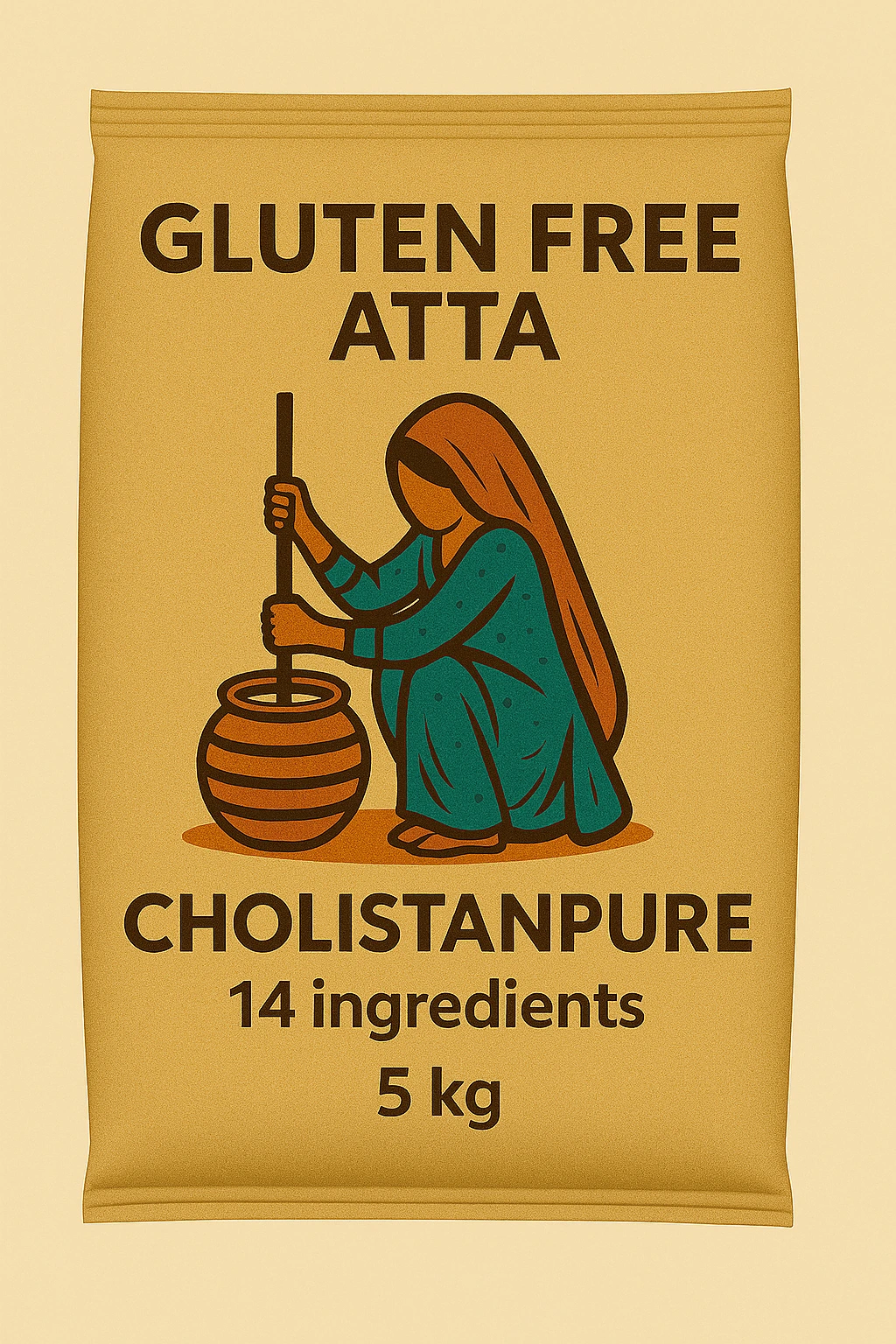
- Specialty and premium grocers: CholistanPure Provide Best & Premium Quality.
- Online: Purchase From Cholistanpure which Providing 100% Organic & Authentic Flour.
- Local chakkis: For single-grain milling on request; discuss cleaning protocols and timing to avoid wheat runs.
Typical price ranges in PKR (guide only)
- Single flours (rice, jowar, bajra, makki): PKR 250–600 per kg, depending on brand and city.
- Premium flours (oats gluten-free, buckwheat, quinoa, amaranth): PKR 700–1,800 per kg due to import and limited volumes.
- Starches and binders (potato starch, cassava, psyllium): PKR 500–1,200 per kg.
- Ready blends labeled gluten-free: PKR 600–1,800 per kg, based on ingredients, certification, and packaging.
Tip: Prices fluctuate with harvests, import duties, and exchange rates. Buy staple flours in monthly quantities and rotate stock.
How to choose a trustworthy pack
- Label clarity: Ingredient list, “gluten-free” claim, allergen and cross-contact statements.
- Lot traceability: Batch number, manufacturing date, and best-before.
- Certification: Food safety (e.g., FSSC 22000), gluten-free seals when available, and Halal.
- Packaging: Thick, sealed pouches with tamper evidence; minimal powder leakage at seals.
Budget-smart swaps
- Protein on a budget: Besan and jowar are cost-effective compared to quinoa or amaranth.
- Softness without cassava: Use warm water, a little oil, and oats to improve tenderness.
- Flavor boosters: Toast a portion of flour lightly for nuttiness without adding cost.
Example cost model for a 5 kg home blend
- Target blend: 40% jowar, 25% rice flour, 20% gluten-free oats, 10% besan, 5% potato starch
- Assumed prices: Jowar PKR 350/kg, rice PKR 300/kg, GF oats PKR 900/kg, besan PKR 380/kg, potato starch PKR 800/kg
- Weighted cost:
- 0.40⋅350=1400.40 \cdot 350 = 140
- 0.25⋅300=750.25 \cdot 300 = 75
- 0.20⋅900=1800.20 \cdot 900 = 180
- 0.10⋅380=380.10 \cdot 380 = 38
- 0.05⋅800=400.05 \cdot 800 = 40
- Estimated per‑kg cost: 140+75+180+38+40=PKR 473140 + 75 + 180 + 38 + 40 = \text{PKR }473
- 5 kg batch: 5⋅473=PKR 2,3655 \cdot 473 = \text{PKR }2{,}365
Tip: Replace 10% oats with jowar to lower cost if GF oats are expensive. Recalculate quickly with the same method.
Storage, shelf life, and food safety
Pakistan’s heat and humidity can spoil flour and attract pests. Store smart to protect quality and safety.
- Containers: Use airtight, food-grade jars or thick zip bags. Add a food-safe desiccant or a pinch of dry rock salt separately to reduce moisture.
- Cool and dark: Keep away from sunlight and stove heat. A closed cabinet is better than an open shelf.
- Refrigeration: For oat, quinoa, amaranth, and nut-containing blends, refrigerate to slow rancidity.
- Pest control: Freeze new flour for 48 hours to kill eggs; then store sealed. Clean bins with hot water and dry fully between refills.
- Shelf life: Whole-grain flours last 1–3 months at room temperature and 3–6 months chilled. Starches last longer if kept dry.
- First in, first out (FIFO): Label jars with date. Use older stock first.
Tip: If flour smells sour or oily, or shows clumping, discard. Do not risk illness.
Everyday uses, pairings, and kid-friendly ideas
Gluten-free atta can fit easily into Pakistani meals with small tweaks.
- Breakfast: Chilla-style besan pancakes with onions and tomatoes; oat-besan parathas with yogurt.
- Lunch: Soft chapatis with chicken karahi, aloo palak, or mixed daal for balanced protein.
- Snacks: Baked millet crackers with hummus; buckwheat pakoras on rainy days.
- Dinner: Makki-bajra rotis with saag; quinoa-amaranth rotis with kebabs.
- Kid-friendly: Mini rotis rolled with anda bhurji; besan ka cheela wraps; small parathas with cheese and cucumber.
Tip: Brush rotis with ghee after cooking to lock moisture and improve mouthfeel, especially for reheats in lunchboxes.
Frequently asked questions
Is oats flour gluten-free?
Only if the pack clearly says “gluten-free.” Regular oats are often contaminated with wheat during farming or milling.
Is suji/semolina gluten-free?
No. Suji is a wheat product and contains gluten.
Is makki ka atta gluten-free?
Yes, corn is naturally gluten-free. Ensure clean milling and no cross-contact with wheat.
Can I use a tandoor for gluten-free rotis?
Yes, but use dedicated tools and a clean surface. Cross-contact in shared tandoors is a risk.
Why do my rotis crack?
Usually low hydration or insufficient binding. Add 5–10% more water or 1 tsp psyllium per cup flour.
How do I store cooked rotis?
Keep in an insulated roti box wrapped in a clean cloth. For next-day use, refrigerate and reheat on a tawa with a few drops of water.
Is there “gluten-free wheat”?
No. Wheat naturally contains gluten. Only non-wheat grains are gluten-free.
Do I need gums?
Not always. Psyllium husk, oats, or potato starch often provide enough binding. If needed, a small pinch of xanthan or guar can help.
Quick shopping and cooking checklist
- Label check: Gluten-free claim, clean ingredient list, allergen and cross-contact statements.
- Certifications: Food safety system, gluten-free seal if available, Halal.
- Flour mix: Combine structure, softness, and binder in a 2:1:12:1:1-style ratio with 1% psyllium.
- Hydration: Start at 70%70\% water; adjust to smooth, soft dough.
- Rest time: 15–20 minutes for full hydration.
- Heat: Hot tawa, brief cook per side, finish over flame to puff.
- Storage: Airtight, cool, labeled. Refrigerate delicate flours.
- Budget: Use besan and jowar to lift protein and control costs.
Key takeaways for Pakistan households
Gluten-free atta is achievable, affordable, and tasty with the right blends, clean sourcing, and simple technique. Use two to three complementary flours, add a reliable binder, hydrate well, and cook on a hot tawa. Read labels carefully, buy from trusted retailers, and store smart for Karachi’s and Lahore’s climate.




Reviews
There are no reviews yet.